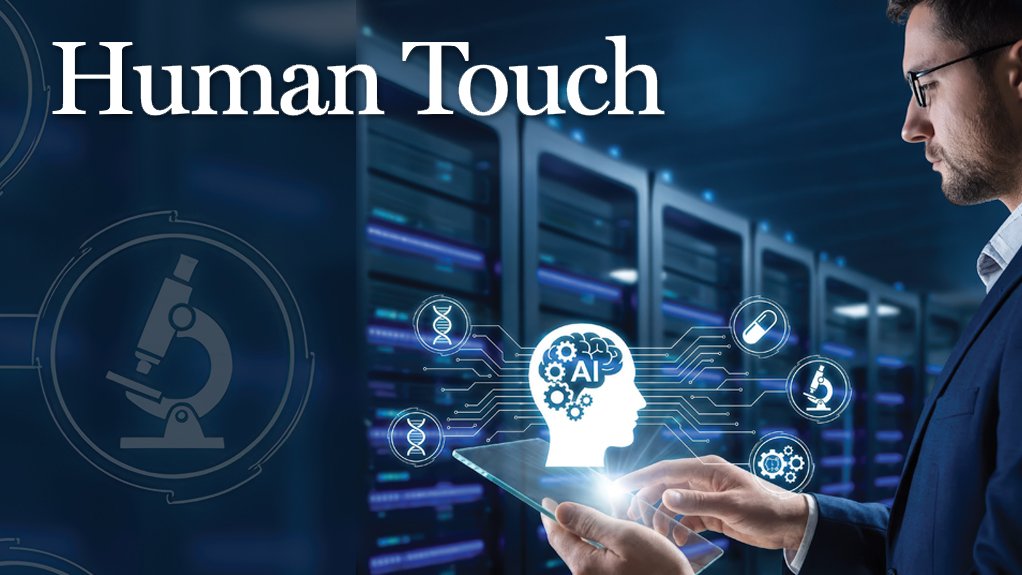
Greater AI fluency in tandem with expert skills foundational for effective deployment





AI ADOPTION Many organisations have identified low-risk AI augmentation opportunities
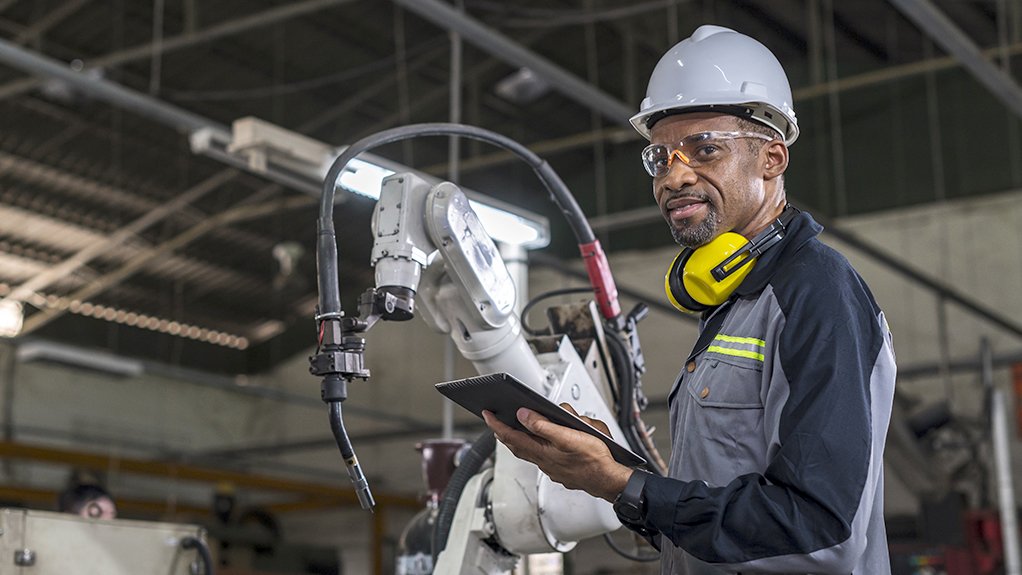
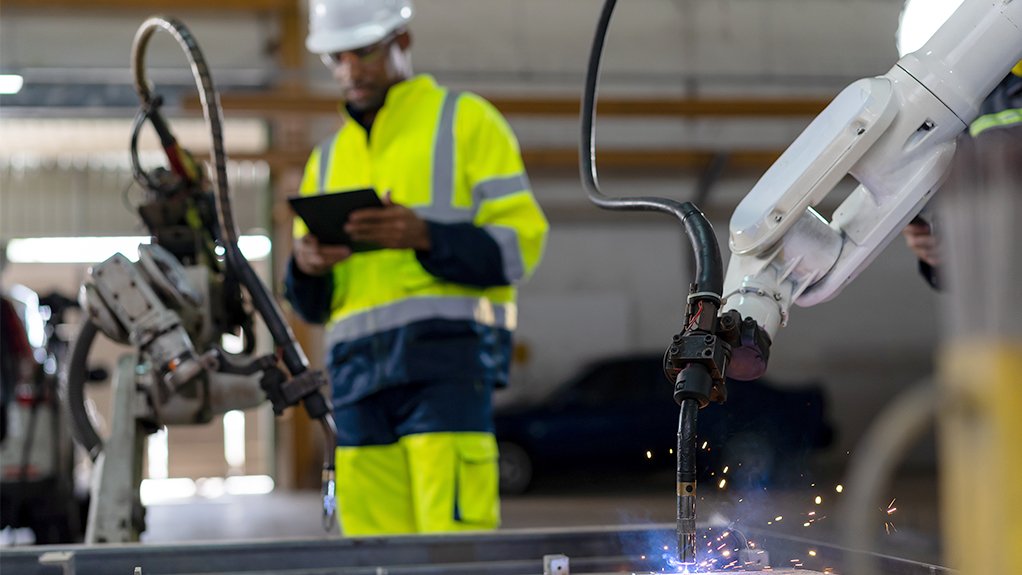
SMART WORK Highly technical industries, including healthcare, mining and logistics, are using AI for predictive maintenance, operational optimisation and data-driven decision-making
AI USE AI is being deployed in the finance, customer service, retail, manufacturing and government services sectors
AI FLUENCY Employees need to be fluent in the use of AI systems
RAVI BHAT By combining deep domain expertise with AI proficiency, businesses ensure their AI systems deliver effective, usable and valuable outputs
SARTHAK ROHAL Transparent AI use, employee training, governance frameworks and operational guidelines, regular audits of AI models and human oversight of critical processes are necessary
SASHA SLANKAMENAC Guardrails turn a clever model into something a business can trust to use repeatedly










While artificial intelligence (AI) systems require information technology (IT) and data science skills to deploy, they also demand industry-specific expertise to ensure their effective integration into business operations and to fit commercial, legal and operational realities.
AI-based systems are currently estimated to contribute about $3-billion to South Africa’s economy yearly, with this figure conservatively forecast to increase threefold to $9-billion by 2030, said Internet services multinational Google South Africa country director Kabelo Makwane at this year’s South African Investment Conference.
South African businesses are deploying machine learning (ML) models for analytics, AI-enhanced automation for processes and operations, natural language processing-driven chatbots for customer service, and enterprise-productivity tools that harness AI.
Additionally, AI-based computer vision systems are being deployed in the mining and agriculture industries, says software and cloud multinational Microsoft South Africa commercial solutions and AI officer Ravi Bhat.
The South African Revenue Service has significantly enhanced the tax-filing experience by integrating AI and ML into its operations, and has further improved taxpayer interactions by deploying a chatbot that provides personalised guidance based on individual records.
In the financial services sector, First National Bank uses Microsoft’s AI sales-assistance Copilot system to help bankers craft professional communications to customers in South Africa’s native languages. This system aims to enhance customer interactions, and streamline communications and customer service, Bhat points out.
Standard Bank has adopted a low-code approach to automate its processes, conduct analyses, and develop solutions for various business requirements, and has also developed an automated IT help desk bot that can resolve most employee IT queries, he adds.
AI Skills
AI is being deployed in practical applications first in South Africa, says software engineering company Dariel AI practice lead Sasha Slankamenac.
Deploying and maintaining AI systems demand strong technical capabilities, including ML, data engineering, software integration, security and monitoring.
On the business side, success with AI systems requires sound process design, risk management, clear decision-making and the ability to drive change.
Businesses are using AI systems for fraud detection, credit and risk analysis, customer support, document handling, internal knowledge search, forecasting, recommendation engines, coding assistance and decision support, among other functions, Slankamenac says.
While some of these systems are predictive and others use generative AI, they are first and foremost tools inserted into real workflows to cut effort, improve speed or strengthen decisions.
This is why a blend of engineering, operations, compliance and business judgement skills is essential.
“The organisations that realise value from AI are usually the ones that can make the technology behave inside the messiness of day-to-day operations,” says Slankamenac.
The breadth of AI use cases is expanding as companies seek to drive efficiency, innovation and better service delivery. In this context, industry expertise plays a decisive role in AI’s success by providing context, which sharpens such systems’ relevance and usability, says Bhat.
By combining deep domain expertise with AI proficiency, businesses ensure their AI systems deliver effective, usable and valuable outputs. Domain-specific skills are critical for integrating AI into business processes, interpreting AI outputs responsibly, and ensuring ethical use, he explains.
“AI can automate or augment a wide range of business functions. The key is to identify tasks that are repetitive, data-driven and well- defined for safe automation, as well as tasks that can benefit from AI assistance through augmentation, without ceding full control in high-risk areas,” says Bhat.
In South Africa, organisations across the finance, customer service, retail, manufacturing and government services sectors are already identifying many low-risk AI augmentation opportunities, he adds.
Sectors such as healthcare, mining and logistics are using AI for predictive maintenance, operational optimisation and data-driven decision-making, says IT services and consulting multinational In2IT Technologies senior VP Sarthak Rohal.
Given the wide application of AI across diverse sectors, the required skill set goes beyond technical know-how, encompassing critical thinking, problem framing and the ability to interpret AI outputs.
Domain expertise is critical when working with AI because, while these systems can process vast amounts of information, they do not always understand the context behind that data, he emphasises.
For example, a financial expert can evaluate whether a fraud detection model is making accurate judgements, while a healthcare professional can validate whether AI-generated recommendations make medical sense.
Without this expertise, organisations risk misinterpreting AI outputs or making flawed decisions based on incomplete insights, he says.
“Businesses need a well-rounded mix of skills. Technical expertise such as programming, data engineering and ML are important, but organisations also need operational skills to manage, deploy and maintain AI systems effectively.
“It is this combination that allows AI to function as a practical business tool,” says Rohal.
Control
Businesses must define what AI is allowed to do, what data it can use, what its outputs must look like, and where human review is compulsory. They must also deploy controls, including logging, testing, approval rules, access management and ongoing monitoring, says Slankamenac.
“Guardrails [safeguards that are built in to ensure AI outputs match design expectations or that remove inaccurate content] are not just about blocking bad answers. They are what turns a clever model into something a business can trust to use repeatedly,” he notes.
The risks are real: AI systems can produce wrong answers, make biased recommendations, introduce privacy and security risks, cause intellectual property leaks, or foster misplaced confidence in machine-generated outputs.
One of the biggest dangers is scale, as a weak AI-supported process can repeat a bad judgement across thousands of cases, he points out.
To counteract this, businesses need clear governance frameworks and operational guidelines when deploying AI, including regular audits of AI models, and strong human oversight of critical processes, Rohal says.
Transparent AI use, proper employee training and clearly defined ethical guidelines are also essential, he adds.
Organisations should monitor AI outputs regularly, maintain transparency about how AI is being used, and include human oversight in high-risk scenarios. Ongoing testing and improvement of AI models based on feedback is another important intervention, he says.
AI oversight systems will need to focus on governance and ensure transparency, accountability, and fairness in AI outputs.
Additionally, regular audits of AI models and decision processes will become standard practice in many organisations, Rohal notes.
An AI system should not be treated as a black box, Bhat emphasises, and businesses must introduce technical guardrails alongside clearly defined governance processes to guide AI behaviour.
“By aligning with responsible AI practices and standards, South African businesses can ensure that their AI systems produce expected, effective and trustworthy outcomes while safeguarding against errors and biases.
“Principled guidelines, technical tools and an accountable culture are key to reaping AI’s benefits in a controlled, beneficial manner,” he says.
Key responsible AI principles that can help mitigate risks include embedding fairness, safety, privacy and accountability into the AI development lifecycle, Bhat highlights.
Organisations should also use monitoring tools for detecting bias in AI systems, explaining AI decisions, robustly testing and validation, and continuously monitoring the systems’ performance after deployment, he adds.
Responsibility for AI outputs ultimately falls on the organisation and its leadership, as AI remains a tool with no legal or moral agency.
Therefore, companies must ensure that humans are accountable for how AI is used and for its outcomes, Bhat advises.
Organisations can counter AI risks by treating such systems as an operational capability that needs strong controls, Slankamenac proposes.
In practice, this means classifying AI use cases by risk, relying on trusted data sources, defining clear review and approval checkpoints, and keeping humans closely involved where the stakes are high. It also requires testing systems properly and monitoring them over time.
The goal is not zero risk, but rather managed risk that is matched to the positive or negative impact of the decision, he states.
AI Leaders
Meanwhile, organisational leaders must understand where AI adds value, where it creates risk, where human judgement must continue to be central, and how work itself may need to adapt around it.
While they do not need to become machine learning engineers, they do need enough AI literacy to evaluate outputs. Leaders must understand accountability, workforce impact, policy, process redesign and performance oversight, says Slankamenac.
Leaders need a strong understanding of AI capabilities and limitations. Strategic thinking, digital literacy and the ability to evaluate AI-driven insights are key skills for management, Rohal concurs.
Additionally, management systems will likely become more data driven and, instead of relying solely on periodic reporting, organisations will increasingly use real-time dashboards and analytics to monitor operations and performance, he adds.
Management and oversight of an AI- augmented workplace will become more data-driven, proactive and collaborative, agrees Bhat.
“We advise that leaders embrace AI for monitoring and insights, but pair it with strong governance and human oversight. A fast-paced AI workplace thrives under managers who are vigilant about AI’s performance and impacts, agile in decision-making, and supportive of employee adaptation.”
Further, fluency in AI systems is increasingly required, and not only from technology teams, but across industries and job levels, Bhat points out.
Knowing how to interact with AI tools productively is an important skill, and softer, human-centred skills, such as interpreting AI outputs, collaborating across teams and solving problems when things go wrong, are also needed to support these systems, Rohal states.
“Employees need to know how to ask the right questions, evaluate results, and combine AI insights with business knowledge.”
Article Enquiry
Email Article
Save Article
Feedback
To advertise email advertising@creamermedia.co.za or click here
Research Reports

Projects


Latest Multimedia

Latest News


Showroom
Astore Keymak is one of South Africa’s leading suppliers of high-quality Thermoplastic Pipeline Systems, with branches in the major provinces.
VISIT SHOWROOM
Established in 1983, the ASTPM is an industry association and representative body of the welded carbon steel tube and pipe manufacturers of South...
VISIT SHOWROOM


Press Office
Announcements
What's On
Subscribe to improve your user experience...
Option 1 (equivalent of R125 a month):
Receive a weekly copy of Creamer Media's Engineering News & Mining Weekly magazine
(print copy for those in South Africa and e-magazine for those outside of South Africa)
Receive daily email newsletters
Access to full search results
Access archive of magazine back copies
Access to Projects in Progress
Access to ONE Research Report of your choice in PDF format
Option 2 (equivalent of R375 a month):
All benefits from Option 1
PLUS
Access to Creamer Media's Research Channel Africa for ALL Research Reports, in PDF format, on various industrial and mining sectors
including Electricity; Water; Energy Transition; Hydrogen; Roads, Rail and Ports; Coal; Gold; Platinum; Battery Metals; etc.
Already a subscriber?
Forgotten your password?
Receive weekly copy of Creamer Media's Engineering News & Mining Weekly magazine (print copy for those in South Africa and e-magazine for those outside of South Africa)
➕
Recieve daily email newsletters
➕
Access to full search results
➕
Access archive of magazine back copies
➕
Access to Projects in Progress
➕
Access to ONE Research Report of your choice in PDF format
RESEARCH CHANNEL AFRICA
R4500 (equivalent of R375 a month)
SUBSCRIBEAll benefits from Option 1
➕
Access to Creamer Media's Research Channel Africa for ALL Research Reports on various industrial and mining sectors, in PDF format, including on:
Electricity
➕
Water
➕
Energy Transition
➕
Hydrogen
➕
Roads, Rail and Ports
➕
Coal
➕
Gold
➕
Platinum
➕
Battery Metals
➕
etc.
Receive all benefits from Option 1 or Option 2 delivered to numerous people at your company
➕
Multiple User names and Passwords for simultaneous log-ins
➕
Intranet integration access to all in your organisation